
June 3, 2026
After a Storm, a Peace-of-Mind Exterior Check Can Prevent the Wrong Claim Decision
Referenced source: Ready.gov: Thunderstorms & Lightning
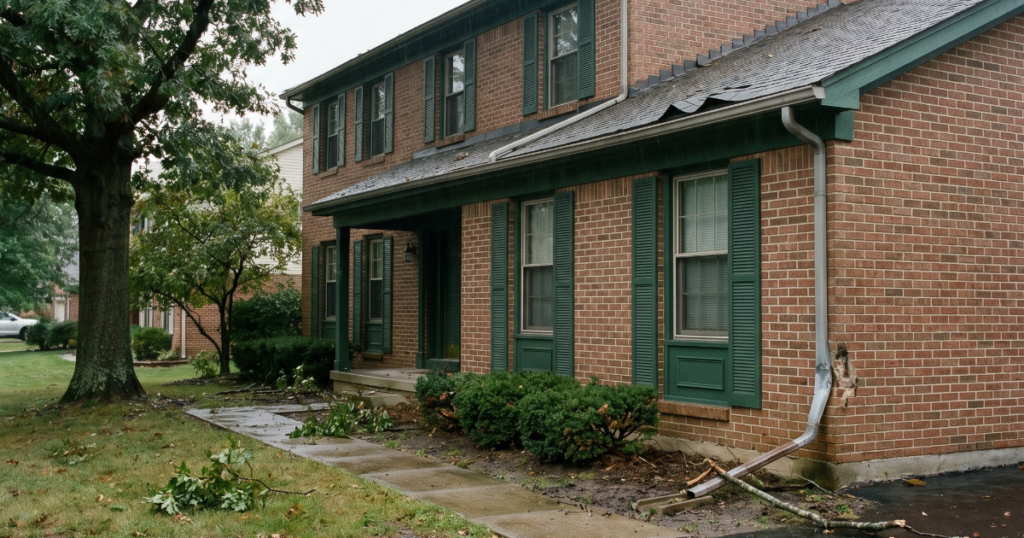
After a Georgia thunderstorm, a home can look fine from the driveway. The roof is still in place, the windows are not broken, and there may be no water dripping inside.
That does not always mean nothing changed. A few lifted shingles, a bent gutter, torn flashing, damp soffit, loose trim, or small branch impact can be easy to miss until the next heavy rain. The goal is not to turn every storm into a claim. The goal is to understand what happened before a homeowner makes the wrong claim decision.
Referenced sources
- Ready.gov: Thunderstorms & Lightning
- Georgia Office of Commissioner of Insurance and Safety Fire: Insurance Claim Tips
What homeowners notice first
Ready.gov notes that thunderstorms can bring intense wind, flash flooding, hail, and lightning. Around the house, the first visible signs may be small: wet staining at the soffit, leaves packed into a gutter, shingles lifted along an edge, a downspout pulled loose, a new stain near a ceiling or attic access, or debris against siding and trim.
Those details matter because coverage is not based on guesswork. Causation, exclusions, deductible, depreciation, repairability, and policy language all depend on what actually changed and whether the damage is storm-related, maintenance-related, or below a practical claim threshold.
What to document before cleanup
The Georgia insurance claim tips advise homeowners to take photos or video before temporary repairs and to keep damaged property for the adjuster when possible. After a storm, wide photos are just as useful as closeups because they show where the tree, debris, roof edge, gutter, window, or slope sits in relation to the damage.
- Photograph the whole elevation of the house before debris is moved.
- Take close photos of gutters, downspouts, roof edges, siding, window trim, screens, fencing, and exterior fixtures.
- Save photos of branches, hail, missing shingles, displaced flashing, damp attic areas, or ceiling stains.
- Keep receipts for tarping, mitigation, emergency cleanup, or temporary repairs.
- Do not discard damaged materials before they can be reviewed, unless safety requires it.
Inspection before filing can be the safer first step
Some homeowners file too quickly and later learn the issue was maintenance, wear and tear, or below deductible. Others wait too long because the damage did not look serious at first. Both can create problems.
A peace-of-mind exterior check can help sort that out. The question is whether there is enough visible storm-related damage, interior impact, or policy concern to justify a claim conversation, or whether the better move is a maintenance repair and monitoring.
Questions worth asking
- What changed after the storm that was not there before?
- Is the damage visible from the ground, attic, roof edge, or interior?
- Does the visible condition point to wind, hail, falling debris, water intrusion, or long-term wear?
- Would the likely repair exceed the deductible after depreciation is considered?
- What policy language, limitation, or exclusion could affect the decision?
Covenant perspective
For Georgia homeowners, the best first step is often a calm second set of eyes. A well-kept home can still have exterior damage that is hard to spot from the driveway, and not every concern needs to become a claim.
Covenant Claim Group helps Georgia property owners look over visible storm concerns, exterior damage, documentation, causation, exclusions, depreciation, and policy language before the homeowner decides whether anything is claim-worthy. For a Georgia property damage review, call or text 470-676-4008 or email info@covenantclaims.net.
This post is general information for Georgia property owners and is not legal advice. Claim decisions depend on the policy, damage conditions, cause of loss, documentation, and insurer review.