
August 8, 2026
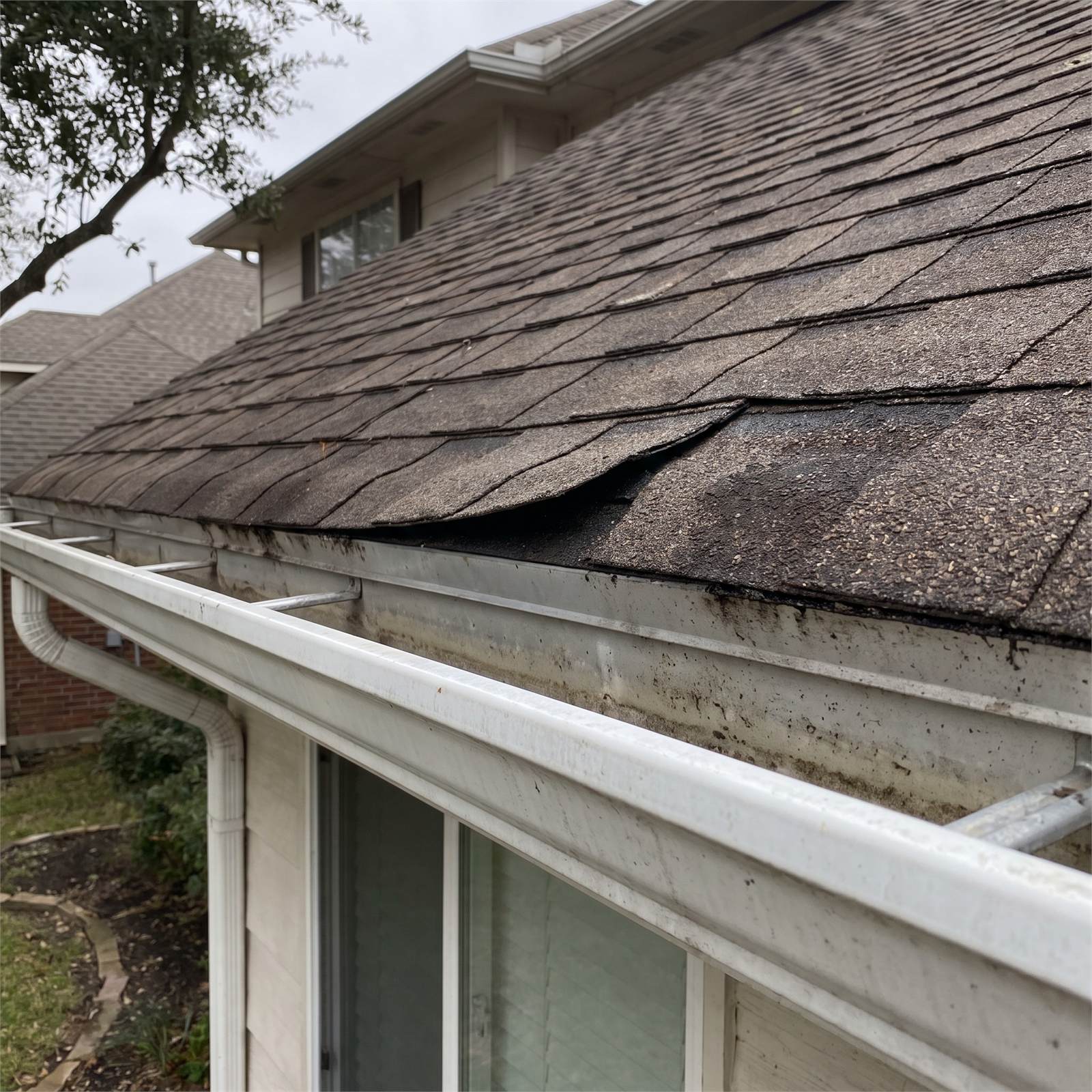
Lifted Shingle Edges Near Roof Eaves After Recent Storms
A shingle edge near the eave can sit slightly higher than the course beside it after recent storms. That small change deserves a careful comparison, but it does not establish wind damage by itself. Sealant age, installation, prior repair, debris, and temperature can also leave a tab unsealed or uneven.
The roof edge has several connected parts
The eave is more than the bottom row of shingles. It includes the starter course, drip edge, underlayment, roof deck, fascia, gutter, and the first field course. Wind pressure can act at exposed edges, while heavy rain can test the drainage path. A qualified professional should identify which component actually moved and whether the surrounding assembly remains aligned.
IBHS roof guidance explains that asphalt shingles rely on the roof deck, fasteners, overlapping courses, and a sealant bond to resist wind. FEMA guidance also treats roof coverings and roof edges as connected parts of a residential wind-resistance system. Those sources support an inspection framework; they do not determine what caused a condition at one house.
Compare the raised edge with the same roof plane
The inspection should show the full eave line before focusing on the specific tab. Compare starter-course alignment, sealant transfer, nail placement, drip-edge position, gutter attachment, and nearby shingles that remain flat. The professional should also note whether the raised edge is isolated, repeated along one exposure, or part of a wider pattern.
That comparison helps separate a lasting physical change from a temporary or older condition. A close view may show a lifted edge, but the wider roof plane explains whether the courses and edge details still work together.
The professional inspection should answer at least these points:
- Identify the roof slope, eave section, course, and exact shingle edge involved.
- Compare the starter course, adhesive transfer, fastener placement, and surrounding tabs.
- Check the drip edge, fascia, and gutter for connected movement or an altered drainage path.
- Explain whether a localized repair can be completed without disturbing serviceable adjacent material.
Put the repair method beside both estimates
The contractor scope and carrier estimate should describe the same location and repair sequence. Compare the professional findings, roof diagram, contractor estimate, carrier estimate, and manufacturer instructions. The documents should identify access, starter material, shingles, edge metal, setup, disposal, and any work needed to lift or reseal adjacent courses.
A narrow line item can miss connected work at the eave. A broad replacement scope can also be unsupported if the lasting condition is isolated and the surrounding material remains serviceable. The written repair method should explain why the proposed area is the right size.
The Georgia roof insurance claim guide explains why roof condition, repairability, estimate scope, and policy language need to be read together.
Small edge details can change the actual cost
If the carrier estimate allows only a few shingles while the contractor scope includes starter, drip-edge access, or gutter handling, the difference can become an out-of-pocket cost. Material availability, brittle adjacent tabs, safe access, and local code requirements may also affect how the repair is performed.
The inspection does not decide coverage. It provides component-level facts so the homeowner, contractor, and claim reviewer can compare the same condition and the same repair method. Before accepting a roof-edge line item, compare the qualified professional’s findings with the contractor scope, carrier estimate, manufacturer instructions, and the condition of nearby eave components.
This article provides general educational information. It does not determine storm causation, coverage, or the repair scope for a specific property.