
August 16, 2026
After a Tree Hits the House: Building the Complete Damage Scope
When a tree trunk or major limb strikes a house, the opening in the roof or wall may be only the most obvious part of the loss. In a tree impact, the force can travel through shingles, roof decking, rafters or trusses, wall framing, eaves, siding, windows, attic insulation, ceilings, interior finishes, and contents below. Emergency tree removal, tarping, shoring, or debris removal can also change the scene before the permanent repair scope is developed.
A public adjuster’s contribution in this situation is to identify and organize the connected damage, preserve the evidence created by emergency work, and build a supported record of what happened and what repair work is being documented. That does not decide coverage, causation, or payment. Those remain policy- and evidence-specific determinations.
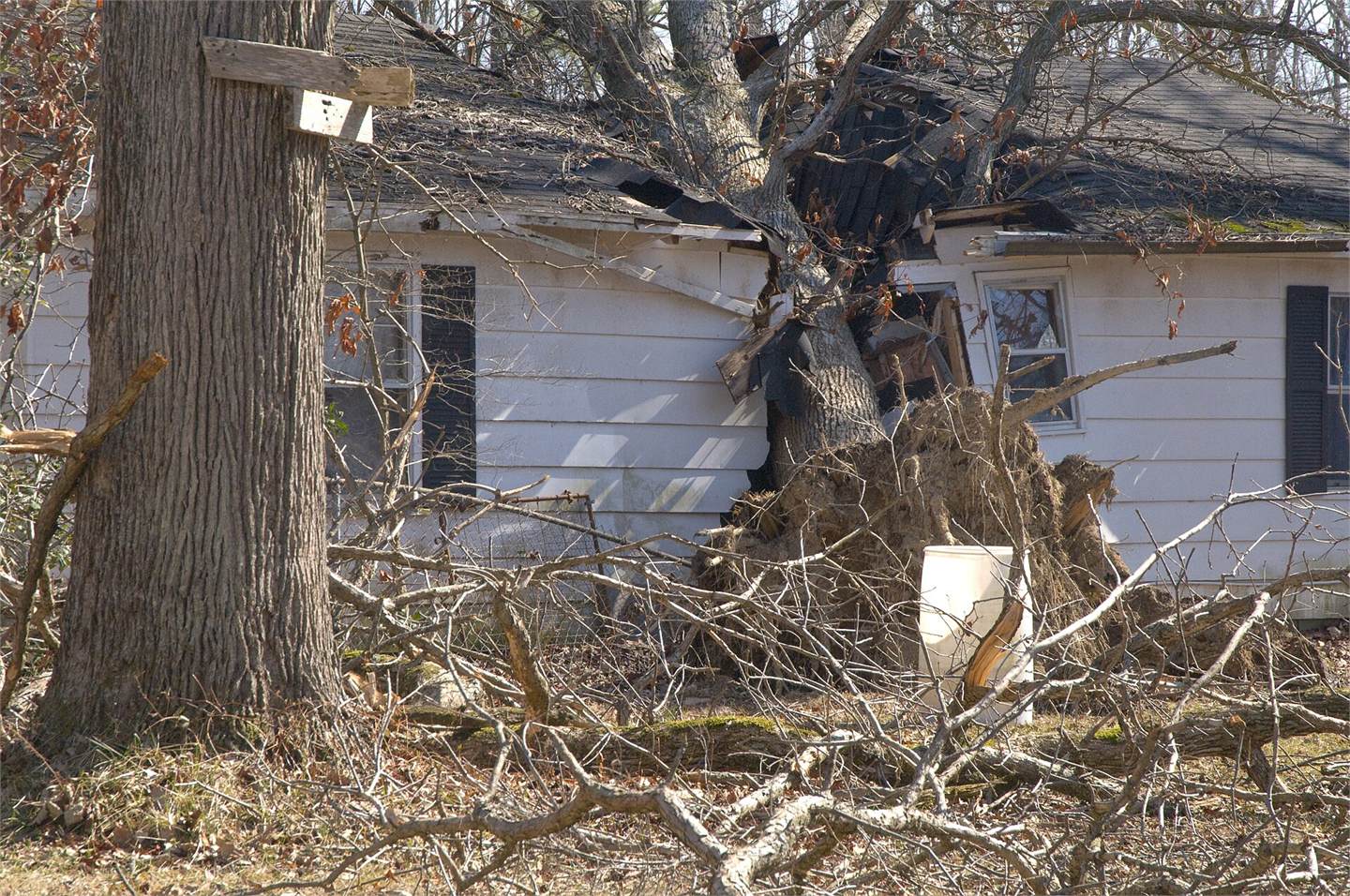
Trace the impact through connected components
The visible impact point is a starting place, not the whole file. A structured loss record can follow the path from the roof surface or exterior wall into the roof deck, framing, attic, interior finishes, and affected contents. The record may include:
- dated photographs and measurements tied to the impact path;
- emergency invoices, contractor observations, engineering information when appropriate, and the permanent repair scope.
For a broader view of the records that may be organized after property damage, see this property-damage claim documentation checklist.
This helps keep separate questions clear: what was directly struck, what adjoining components were disturbed, what water or debris entered through the opening, and what work is supported by the documented conditions.
Connect emergency protection to the permanent repair scope
Tree removal, temporary covering, shoring, board-up, and debris handling may be necessary before a full inspection is possible. Those activities can conceal or remove evidence while also generating invoices, photographs, and work descriptions that matter to the loss record.
A public adjuster can organize the before-and-after photographs, emergency-service records, contractor findings, and permanent repair estimate so the file explains how temporary protection relates to the damaged building components. The goal is a coherent chronology and scope, not an unsupported assumption about what the policy will cover.
Account for building, contents, access, and finish work
A complete scope may need to address more than the damaged roof or wall. Attic insulation, ceilings, flooring, fixtures, personal property, debris handling, safe access, and the work required to reach and restore damaged framing can all be distinct parts of the documentation.
The public-adjuster role is to keep those categories organized and tied to observable conditions, photographs, measurements, and qualified repair information. Items that are uncertain should remain identified as uncertain until additional evidence resolves them.
Keep mechanism, coverage, and scope distinct
The National Severe Storms Laboratory explains that straight-line winds and downbursts can produce damaging winds and fell trees. The National Weather Service also identifies falling trees, power lines, and wind-driven debris as high-wind hazards. Those sources help explain a potential weather mechanism, but they do not establish what caused damage at a particular property or what an individual policy covers.
A supported claim file should therefore keep the weather event, observed impact conditions, repair scope, and policy analysis in their proper lanes. That separation makes the record easier to review and reduces the risk that an assumption is presented as a verified fact.
Build one supported loss record
In a tree-impact loss, a public adjuster can help turn scattered photographs, emergency invoices, repair estimates, contents information, and specialist findings into one organized scope. The practical value is disciplined documentation: each claimed component should connect to a condition, a source, and a reason it belongs in the file.
This article is general educational information. It is not legal advice, engineering advice, a coverage opinion, or a promise of any claim result.