
August 23, 2026
When a Partial Denial Leaves Roof Framing and Temporary Protection Unresolved
Severe wind can remove roof covering, decking, and framing from a home in minutes. Emergency crews may install a tarp or temporary membrane before the carrier finishes its inspection. The homeowner can then receive a payment for part of the roof while a decision letter denies or omits framing, interior water damage, debris handling, or the temporary work.
That is a concrete repair decision. The homeowner may need to decide whether to authorize permanent work, keep paying for temporary protection, ask for a written explanation, or seek further claim review. A total alone does not answer the question. The file needs to identify which component was accepted, which was denied, and which was never addressed.
What current reporting and a storm record show
An Oklahoma Watch investigation into roof-claim practices reported on named Oklahoma litigation involving disputed damage definitions, remote review, claim metrics, discovery disputes, and homeowner claim outcomes. The article described allegations and pending proceedings; it did not establish a finding about another insurer, another state, or any particular Georgia claim.
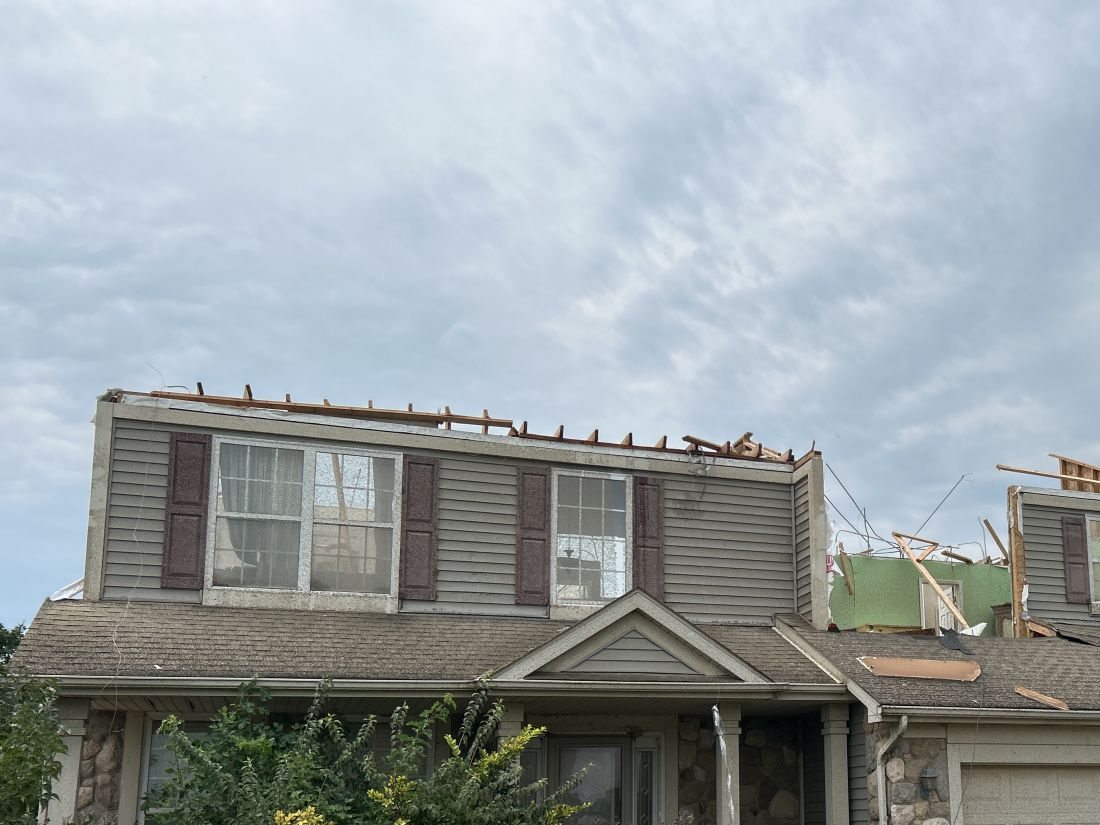
Separately, the National Weather Service Chicago office documented a recent derecho across northern Illinois and northwest Indiana. Its storm-survey photographs show homes with roof sections removed and framing exposed. That Illinois event does not establish the cause or coverage of a Georgia loss. It does provide a specific physical example of why a component-level claim record matters after sudden wind damage.
Read the partial denial by component
A partial denial can be difficult to apply to a repair plan if it uses a broad label while the estimate lists only a few operations. The useful review starts with the exact damaged location and the exact record used for the decision:
- photographs taken before and after temporary protection;
- the field inspection report, roof measurements, and first estimate;
- the revised estimate, decision letter, and policy language cited;
- emergency-service invoices, contractor scope notes, and qualified findings about decking or framing;
- interior moisture readings, damaged-finish photographs, and debris-removal records.
Suppose the field photographs show missing roof material and exposed framing, but the revised estimate addresses only shingles and underlayment. The decision letter should make clear whether framing was inspected, omitted for lack of information, or denied under a stated damage definition or policy provision. The same is true for a tarp, board-up, water mitigation, or debris operation that does not appear in the estimate.
The record should also preserve sequence. A photograph made before the tarp may show an opening that is no longer visible. An emergency invoice may identify the roof area protected. A contractor note may identify material that could not safely remain in place. Those dated facts help define what was physically present before the scene changed.
A broader Georgia roof-claim documentation guide explains how roof records can be organized by damaged component.
What a public adjuster can do with the file
A public adjuster can inspect the roof, accessible framing, attic, and interior; review the field report, photographs, measurements, estimates, and decision letter; and build an item-by-item record of the unresolved scope. That work can identify whether an omitted component was actually inspected, where supporting evidence appears, and what factual question still needs an answer.
The public adjuster can also document the purpose and duration of temporary protection, organize qualified repair findings, and present factual support for another written claim decision. The contribution is property inspection, scope documentation, and claim-file analysis. It is not a promise that a denied item will be covered or paid.
Make the repair decision from a stated reason
A partial denial is not automatically incorrect, and visible damage does not by itself decide coverage. But the homeowner should be able to identify the accepted work, the denied work, the evidence used, and the policy or damage definition stated for each decision.
When a partial denial leaves roof framing or temporary protection unresolved, a public adjuster can inspect the damaged areas, review the field report, photographs, measurements, estimates, emergency invoices, and decision letter, then explain whether the documented scope supports further written consideration or supports proceeding from the existing decision. General educational information only; coverage and outcomes depend on the policy and loss facts.