
August 13, 2026
After Wind-Driven Rain Reaches a Ceiling: Connecting the Full Loss Record
After severe weather, a brown ceiling stain may be the first damage a homeowner notices. The path that produced it can begin much farther away: wind may disturb a roof edge, flashing, vent, or shingle field, and rain may then move across the roof deck or framing before reaching the finished room below. By the time the stain appears, emergency tarping, drying, or limited demolition may already be changing the evidence.
That is where a public adjuster can make a concrete contribution. The job is not to assume that every roof condition caused the interior damage or that a policy must pay for it. The job is to build a dated, room-specific record that connects the reported weather event, exterior observations, attic conditions, interior moisture, emergency work, and repair estimates so each item can be evaluated against the policy and the facts.
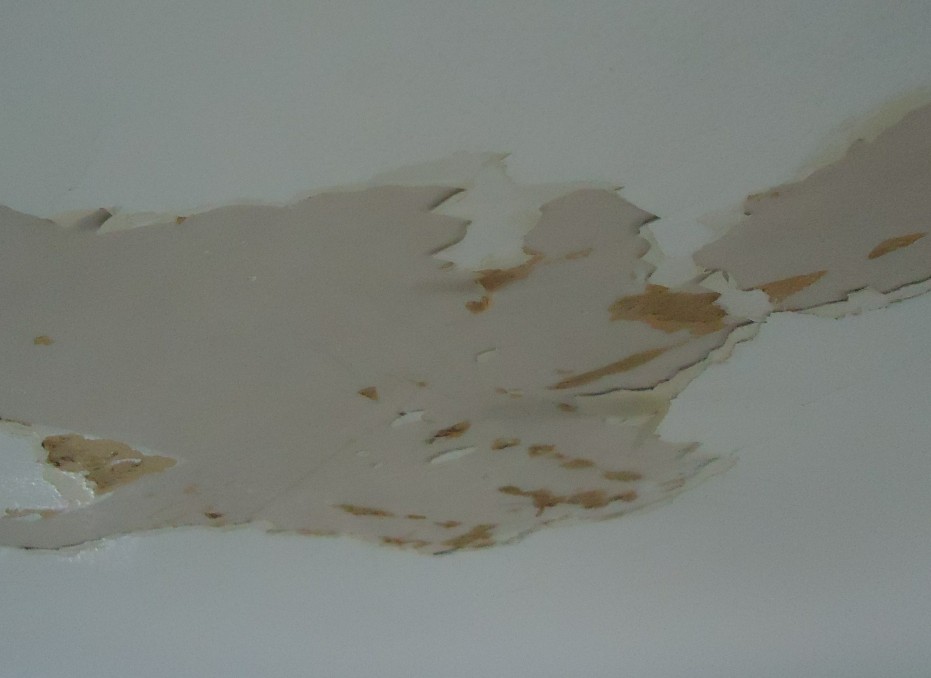
Start with a loss timeline, not the ceiling stain
A useful loss record begins with what happened and when. That can include the time severe weather moved through the area, when the occupant first saw water or a stain, when the source area was inspected, when temporary protection was installed, and when drying equipment began operating.
The National Weather Service advises property owners to assess damage only after the severe-weather threat has ended and to stay out of damaged buildings. Safety comes first. Once safe access is available, a public adjuster can organize photographs, inspection notes, contractor records, and homeowner observations along one timeline.
The timeline matters because later work can hide earlier conditions. A tarp can cover displaced material. Wet insulation can be removed. A ceiling may be opened to allow drying. None of those steps is inherently a problem, but the claim record should preserve what was observed before, during, and after the emergency work.
Map the exterior, attic, and interior as one physical path
The roof surface and the stained ceiling should not be documented as unrelated photographs. A public adjuster can create an evidence map that identifies the exterior area of concern, the corresponding attic bay or roof framing, and the interior room beneath it.
That map may include:
- Wide and close exterior photographs showing roof edges, flashing, vents, penetrations, shingles, and temporary protection.
- Attic photographs showing the roof deck, framing, insulation, water marks, or moisture readings when the attic can be entered safely.
- Interior photographs showing the full room, the damaged ceiling or wall, nearby trim, flooring, fixtures, and affected contents.
- A room-and-material log that records what was wet, removed, dried, cleaned, detached, reset, or repaired.
The purpose is not to declare causation from appearance alone. It is to give the carrier, contractors, and policyholder a common reference for where each observation occurred and how the documented areas relate to one another.
Reconcile emergency work with the permanent repair scope
Emergency work and permanent repairs are different stages of the same loss. A roofer may install a tarp or temporary patch. A mitigation company may remove wet insulation, open part of the ceiling, record moisture, and operate drying equipment. A repair contractor may later price roofing, drywall, insulation, paint, trim, flooring protection, and access work.
A public adjuster can reconcile those records line by line. If the mitigation photographs show wet insulation above a bedroom, the repair scope should account for the documented insulation and ceiling work. If the tarp invoice identifies a roof location, the exterior photographs and roof estimate should use the same location. If drying equipment served two rooms, the room log should explain why both rooms appear in the mitigation record.
This reconciliation can reveal a missing room, material, quantity, access step, or temporary measure without promising that any disputed item will be covered. It also helps separate supported loss work from unrelated maintenance conditions.
Keep damage, maintenance, and policy questions distinct
Wind-driven rain claims often contain more than one kind of fact. There may be recent physical damage, older wear, prior repairs, installation details, or maintenance concerns in the same roof area. Those observations should be recorded accurately instead of blended together.
Georgia’s Office of the Commissioner of Insurance explains that homeowners coverage varies by policy, location, construction, selected options, and the event that caused the damage. A public adjuster can review the policy language alongside the physical record and identify the questions that need a carrier response. The adjuster does not decide what the policy covers, what the carrier will pay, or what result follows.
The Georgia storm and hail claim guide provides additional context on preserving records after severe weather.
Finish with one supported loss package
The final package should let a reviewer move from the reported storm date to the exterior area, attic path, interior rooms, emergency measures, moisture or drying records, and permanent repair scope without guessing how the pieces connect.
That is the practical value a public adjuster can add in this situation: one chronology, one location map, and one reconciled set of records for the roof opening and the interior water damage. It does not decide the outcome. It makes the documented loss specific enough to evaluate.
This article provides general educational information. It does not determine coverage, causation, or the outcome of any individual claim.