
July 26, 2026
Lifted Shingle Tabs Near a Roof Edge After Recent Storms
A roof can look normal from the yard until the light catches one shingle tab sitting higher than the row around it. After recent storms, that small change is worth a careful look, but it does not prove the wind caused damage.
Heat, age, an old repair, a fastener problem, and a shingle that never sealed correctly can leave a similar condition. A qualified professional should inspect the exact tab and the nearby roof area before anyone decides what caused it.
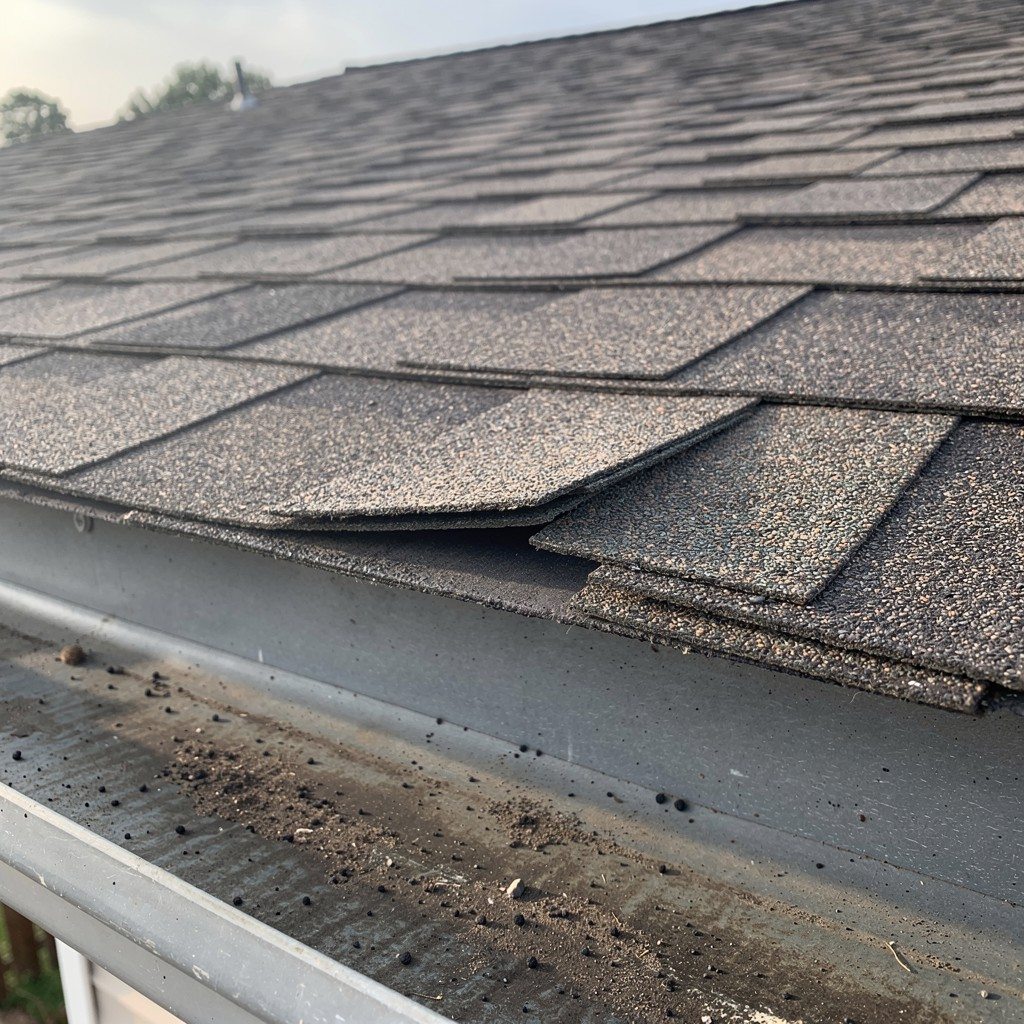
What the raised tab can tell an inspector
The tab itself is only the starting point. A professional should check whether it still lies flat, whether the seal strip is holding, and whether the shingle has a crease, tear, crack, or missing edge.
The inspection should also compare:
- the same row on both sides of the raised tab
- the roof edge, corners, ridges, valleys, vents, and flashing
- fastener placement and any signs of an older repair
- shingle age, brittleness, wear, and seal condition
- nearby roof slopes that faced a different direction during the weather
A repeated pattern in exposed areas can point in a different direction than one isolated tab next to a repair or installation issue.
Wind movement does not always remove a shingle
Wind can move a tab without carrying it away. The shingle may settle back down and still show a crease or a broken seal when it is examined closely. From the ground, the roof may only show a slight raised edge or an uneven shadow line.
That is also why the roof should not be judged from one photograph or a quick drive-by glance. The condition needs to be checked at the shingle and compared with the rest of the roof system.
For more background on roof conditions and insurance decisions, see Covenant’s Georgia roof insurance claim guide.
The inspection may point away from a claim
Recent storms make a new concern timely, but ordinary roof conditions still matter. A tab can sit high because the shingle is old, because debris is caught underneath, because a prior repair changed the alignment, or because the seal never bonded.
A useful inspection should explain which details fit wind movement and which details fit wear, installation, or an older condition. It should also note whether the issue is isolated or part of a wider pattern.
That answer may show storm-related damage worth comparing with the policy and deductible. It may also show a small maintenance issue or no meaningful storm damage at all. Either result is better than filing a claim from a guess.
Get the cause straight before choosing the next step
A raised tab near the roof edge is easy to dismiss and easy to overstate. A qualified professional should inspect the seal, the shingle surface, the surrounding rows, and other exposed roof areas, then explain what the pattern supports.
The goal is a plain answer about the condition of the roof and whether an insurance claim makes sense.
Published by Covenant Claim Group LLC.
Matt Wilbur | Georgia Public Adjuster License #3033130