
July 23, 2026
Loose Soffit Panels After Recent Storms: What a Professional Inspection Should Check
One soffit panel hanging a little lower than the rest can look like a quick snap-back repair. It may be. It can also leave an opening where wind-driven rain reaches the eave or attic. Before anyone pushes the panel back into place, the full eave should be inspected and documented safely.
What the condition can mean
The soffit is the finished underside of the roof overhang. Depending on the home, it may be made from vented vinyl or aluminum panels held between a channel at the wall and the fascia edge. Wind pressure can push a panel upward or pull it downward. A loose track, an installation issue, age, or an animal can create a similar-looking condition, so the visible gap alone does not prove storm damage.
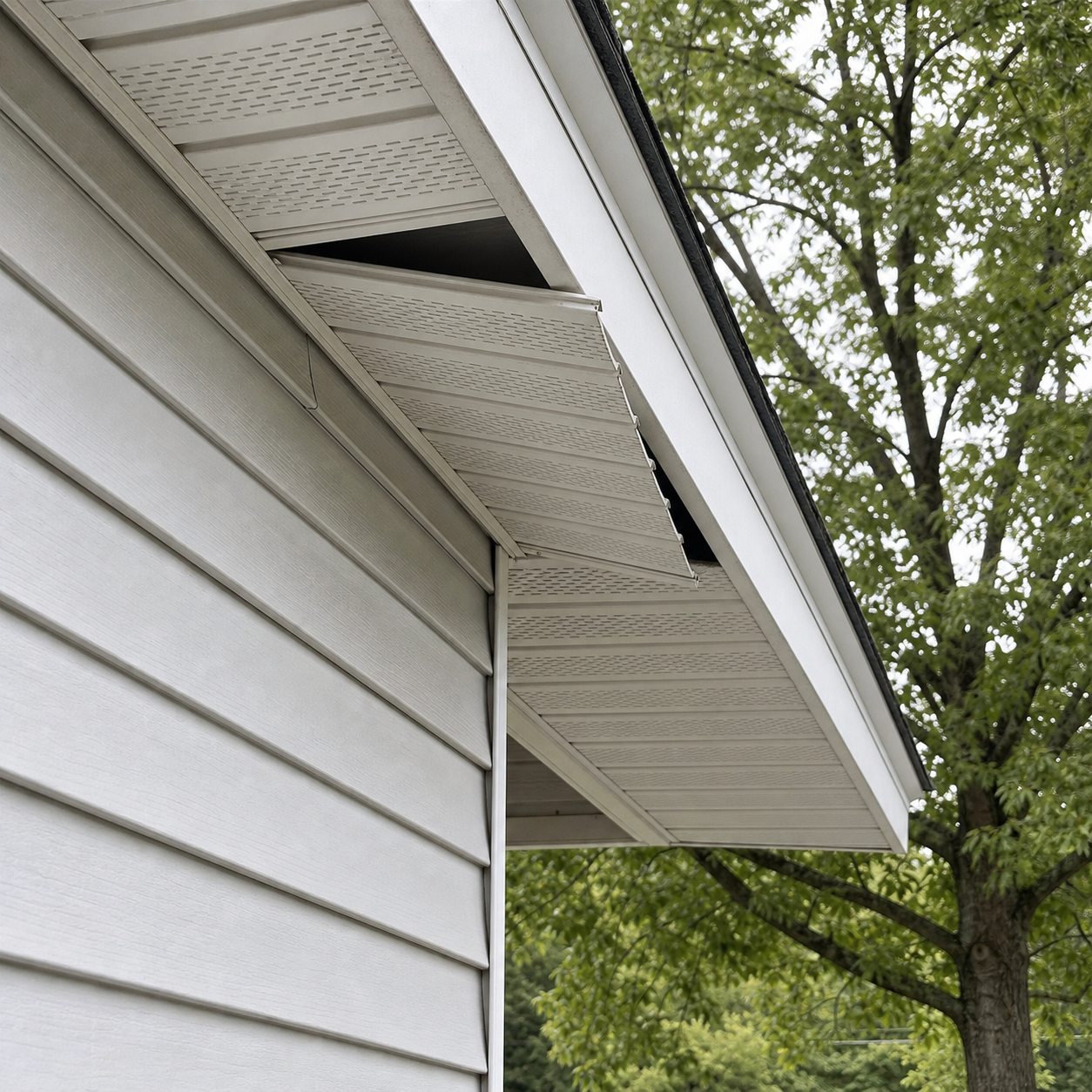
An exterior inspection should check:
- one panel sitting lower or higher than the panels beside it
- a narrow dark gap along the wall channel or fascia edge
- a vented panel that is bowed, cracked, or partly out of its track
- fascia cover, gutter, trim, or siding that shifted near the same area
- damp insulation, fresh staining, or debris below the opening
Homeowners should not climb a ladder, reach into the eave, or try to diagnose the cause from the roof edge. Stay clear of downed lines, hanging limbs, loose metal, wet electrical materials, and any unstable part of the property.
Why a professional inspection matters
A professional inspection should document the whole eave, several panels on both sides of the loose section, and close details of the gap, panel edge, wall channel, fascia, vent pattern, and any fresh marks or debris. That wider record helps show whether the condition is isolated or part of a larger exterior pattern.
When an attic area is safely accessible, the inspection can also check for a water track, displaced insulation, damp wood, or daylight at the eave without disturbing insulation or wiring.
Why the before-repair condition matters
A contractor may need to reattach the panel quickly to keep weather or animals out. An inspection before that work preserves the visible condition and can identify whether the track, panel, fasteners, fascia, or surrounding material appears loose or damaged.
Once the panel is back in place, the eave may look normal without explaining why it opened. A professional before-and-after record helps separate a small maintenance repair from a wider pattern that deserves attention.
Check nearby components without assuming a claim
Recent storms can affect more than one exposed edge. The inspection should compare the soffit condition with nearby fascia, gutters, roof-edge metal, siding, shutters, and tree debris. The goal is not to build a claim from one loose panel. It is to understand whether the condition is isolated, whether water entered, and whether anything else changed.
For a broader exterior overview, review Covenant’s Georgia storm and hail claim guide. A fair inspection may find storm damage, an installation problem, ordinary wear, animal activity, or no meaningful damage at all.
Leave the inspection and documentation to a professional
Homeowners should not climb, diagnose the cause, or build the condition record. A qualified exterior inspection should document the soffit, fascia, wall channel, gutters, roof edge, and related conditions before repair changes what is visible.
Published by Covenant Claim Group LLC.
Matt Wilbur | Georgia Public Adjuster License #3033130