
June 2, 2026
Small Kitchen Fire? Smoke and Soot Can Travel Farther Than the Flame
Referenced source: U.S. Fire Administration: Helping Community Residents After a Home Fire
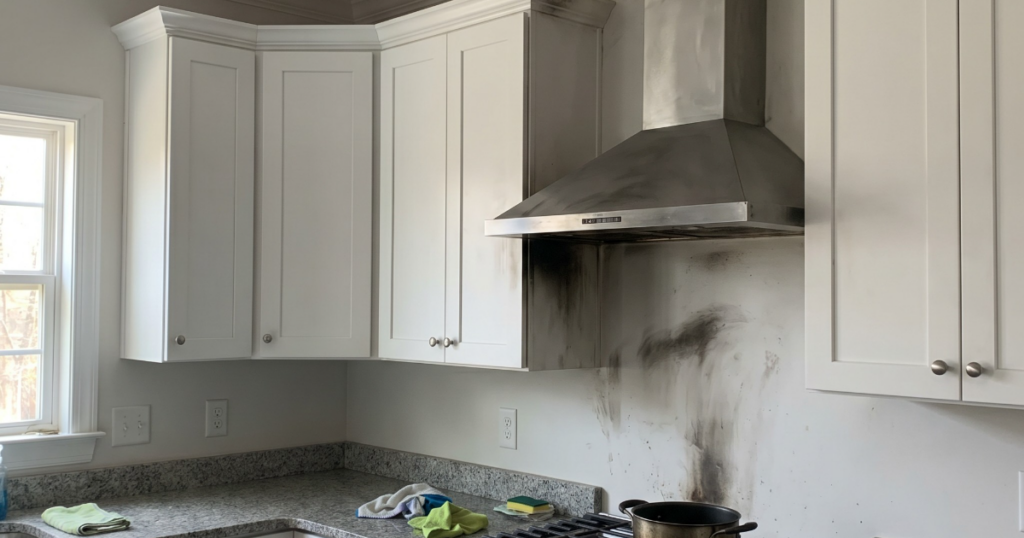
A small kitchen fire can look contained once the flame is out. The pot is moved, the wall is wiped, the range hood looks stained, and everyone wants the house back to normal.
Before permanent cleanup starts, slow down long enough to document what changed. Smoke and soot can travel farther than the visible burn mark, and the claim question may include more than the one spot where the fire started.
Referenced sources
- U.S. Fire Administration: Helping Community Residents After a Home Fire
- Georgia Office of Commissioner of Insurance and Safety Fire: Insurance Claim Tips
What homeowners notice first
After a small stovetop, appliance, candle, fireplace, or electrical fire, the obvious damage may be a dark stain above the source. But homeowners may also notice smoke odor in nearby rooms, soot on ceilings or cabinet tops, staining around vents, discolored paint, oily residue, or water and chemical residue from putting the fire out.
Those details matter because a fire claim is not always limited to the burned item. Coverage, exclusions, cleaning scope, contents handling, odor treatment, and repair pricing all depend on what was damaged, where it traveled, and what the policy says.
What to document before cleanup changes the scene
The Georgia insurance claim tips advise homeowners to take photographs or video before temporary repairs and to keep damaged property for the adjuster when possible. For fire and smoke damage, that means taking wide photos first, then close photos.
- Photograph the fire source, the wall or ceiling above it, and the nearest cabinets, counters, flooring, windows, and vents.
- Take photos from the doorway so the adjuster can see how smoke may have moved through the room.
- Save photos of soot on high surfaces, inside cabinets, around HVAC returns, or on nearby contents.
- Keep receipts for emergency cleaning, board-up, ventilation, temporary lodging, or mitigation work.
- Do not throw away damaged materials or contents before they can be reviewed, unless safety requires it.
Temporary cleanup is different from permanent repair
Safety comes first. Ventilate when safe, follow fire department guidance, and do what is necessary to prevent further damage. But permanent painting, cabinet replacement, deep cleaning, or contents disposal can erase evidence before the insurer has enough information to evaluate causation and scope.
If the first estimate only mentions cleaning one visible stain, ask whether odor, soot spread, HVAC impact, adjacent finishes, contents, and water or extinguisher residue were considered. A narrow estimate may miss damage that is real but less obvious than the burn mark.
Questions worth asking
- What rooms and surfaces were inspected for smoke or soot?
- Was odor treatment included or excluded, and why?
- Were cabinets, paint, trim, flooring, contents, and HVAC components considered?
- Is the estimate itemized by room, surface, material, labor, and cleaning method?
- What depreciation, deductible, limitation, or exclusion is being applied?
Covenant perspective
For Georgia homeowners, the key is not to overstate a small fire. It is to make sure the visible soot, smoke odor, cleanup needs, causation, exclusions, depreciation, and policy language are reviewed before the house is cleaned up in a way that makes the damage harder to prove.
Covenant Claim Group helps Georgia property owners review fire, smoke, water, storm, and other property damage claim questions. For a Georgia property damage review, call or text 470-676-4008 or email info@covenantclaims.net.
This post is general information for Georgia property owners and is not legal advice. Claim decisions depend on the policy, damage conditions, cause of loss, documentation, and insurer review.