
August 8, 2026
Torn Shingle Tabs on One Roof Slope After Recent Storms
A torn asphalt shingle tab can leave a small exposed section on one roof slope after recent storms. The visible tear matters, but it does not prove when the condition happened or whether a policy covers it. Age, installation, prior foot traffic, earlier repairs, and material brittleness can also affect how a tab separates.
A torn tab is a component condition, not a complete cause analysis
Asphalt shingles work as overlapping courses fastened to the roof deck and held down by a sealant bond. IBHS guidance explains that wind can lift unsealed or poorly bonded tabs. Repeated movement can bend, crease, tear, or remove part of a shingle. FEMA guidance emphasizes the roof covering, deck attachment, and edge details as connected parts of a residential wind-resistance system.
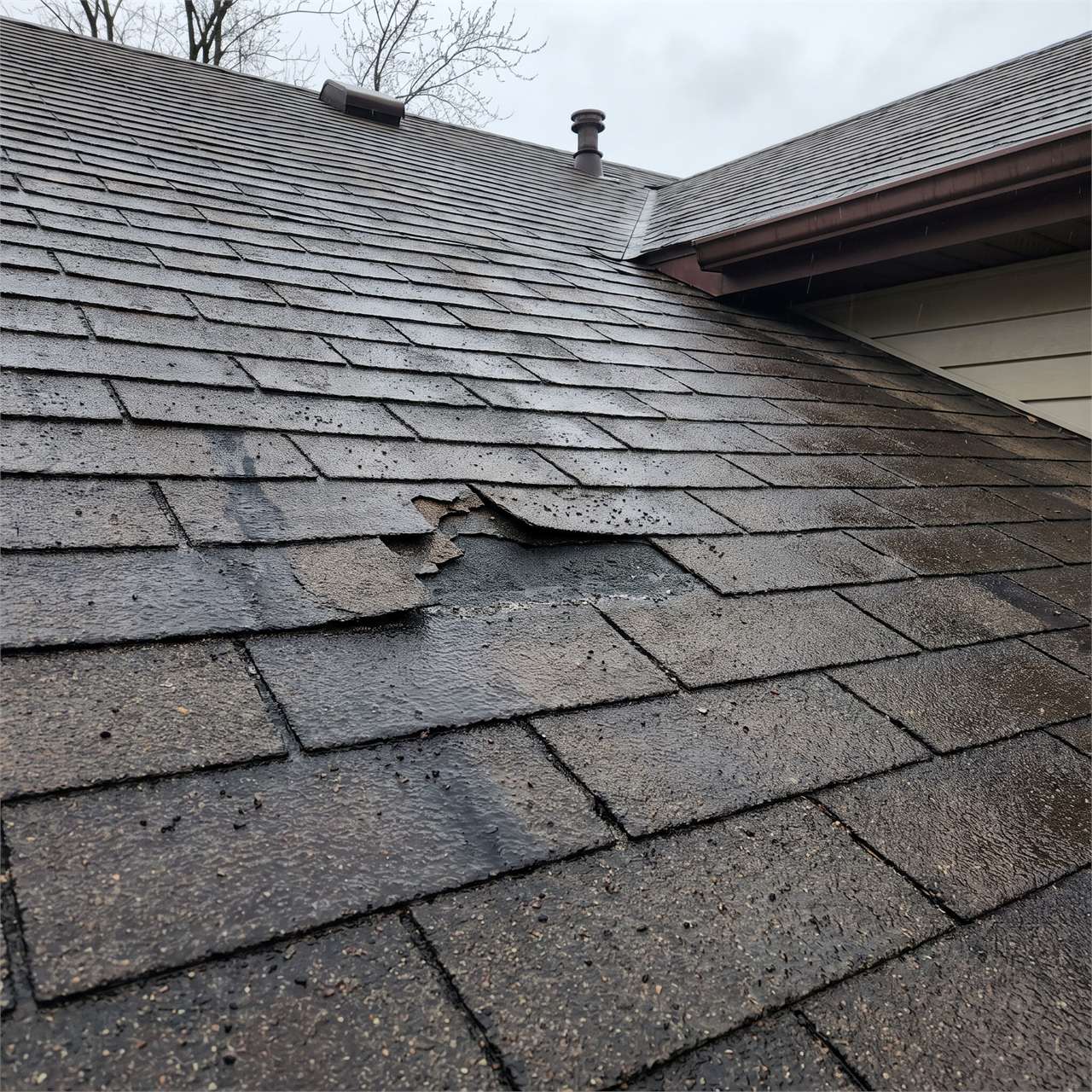
A qualified professional should use those mechanics to frame the inspection without jumping from one tear to a coverage conclusion. The professional should compare the torn tab with the remaining sealant, fastener placement, nearby courses, roof age, prior patches, and unaffected areas on the same slope.
The pattern around the tear matters
The inspection should begin with the full roof plane and then narrow to the exact tab. Note whether the tear follows a crease, nail line, cut edge, or previous repair. Compare its orientation with other lasting marks and with the roof’s exposed edges, corners, and ridges.
The written findings should cover at least these points:
- Identify the roof slope, course, and shingle tab containing the tear.
- Describe whether the sealant bond is intact, separated, contaminated, or absent at that location.
- State whether nearby shingles are flexible enough to lift and reseal during a repair.
- Record whether the same pattern appears elsewhere on the slope or remains isolated.
- Explain what access, underlayment, flashing, starter, or ridge work the repair method actually requires.
That wider comparison helps distinguish a small repairable condition from a pattern that affects a larger area. It also prevents a close-up photograph from carrying more certainty than the physical evidence supports.
Compare a real repair sequence, not just quantities
The contractor scope and carrier estimate should identify the same affected location. Compare the professional roof findings, slope diagram, contractor estimate, carrier estimate, manufacturer instructions, and material availability. The documents should explain how adjacent shingles will be lifted, whether they can be resealed, and what setup and disposal the work requires.
A spot-repair line item may be too narrow when brittle or bonded surrounding shingles cannot be disturbed without additional damage. A larger replacement scope may be too broad when the tear is isolated and the surrounding material remains serviceable. The written repair method should resolve that difference.
The Georgia storm and hail claim guide explains why the physical condition, repair method, estimate scope, and policy language must be considered together.
Repairability affects the final cost
Even a small tear can involve more than the replacement shingle. Matching material, safe access, sealant behavior, underlayment protection, disposal, and the ability to work beneath neighboring courses can change the price. If those items appear in the contractor scope but not the carrier estimate, the difference can become an out-of-pocket cost.
The inspection does not decide coverage or storm causation. It supplies the component facts needed to compare the proposed repair fairly. Before accepting a torn-tab repair line item, compare the qualified professional’s roof findings with the contractor scope, carrier estimate, manufacturer instructions, material availability, and the serviceability of surrounding shingles.
This article provides general educational information. It does not determine storm causation, coverage, or the repair scope for a specific property.