
August 4, 2026
A Tree on the Roof Can Hide Damage Below the Shingles
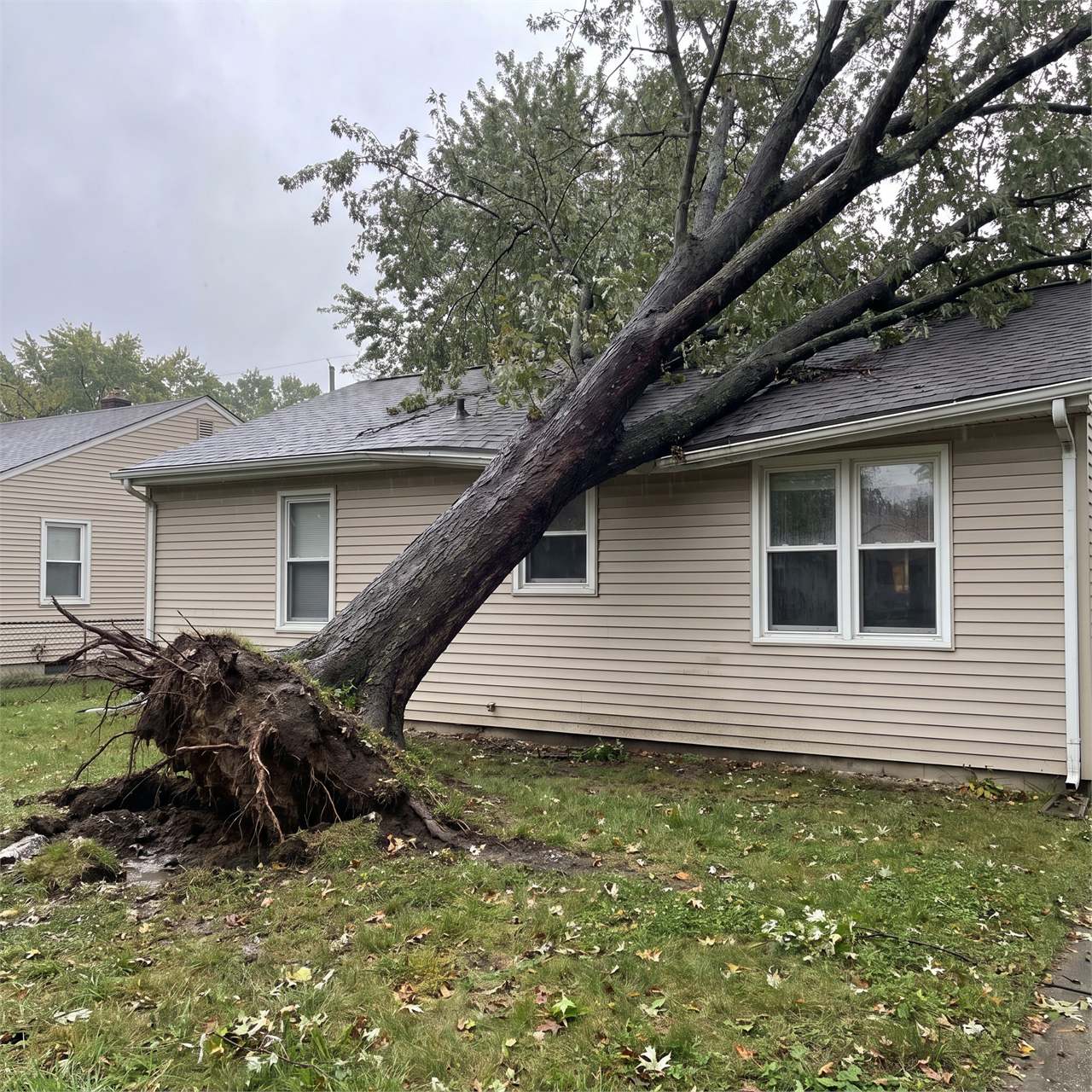
When a tree lands on a house after recent severe weather, the visible trunk is only the starting point. The weight can be concentrated at one or two impact areas while the roof covering still looks mostly intact a few feet away.
That matters because removing the tree and replacing a few shingles are separate operations. The inspection needs to trace the load from the impact point through the roof covering, deck, framing, eave, fascia, gutter, and any wall below it.
Follow the physical load path
A qualified professional should first identify the root ball, snapped trunk, broken union, or failed limb that led to the roof. The report should show where the wood struck the building, whether the trunk slid, and which components carried the load.
The roof surface may show crushed shingles, displaced tabs, a shallow depression, split decking, damaged flashing, or a gutter pulled out of line. Inside the attic, the same impact area may align with cracked decking, shifted bracing, split rafters, damaged truss members, or loosened fasteners. The condition can also be limited to the covering. The inspection should state which of those findings are present instead of assuming hidden structural damage from the photograph alone.
Tree removal records and the property inspection do different jobs
The tree-removal invoice explains what was cut, lifted, and hauled away. It may also identify the equipment and access needed to take weight off the house safely. The property inspection report explains what the building looked like after that load was removed and which roof or framing components were affected.
Those two records should connect at the impact point. If the removal crew describes a heavy trunk resting across the lower roof but the property report discusses only ridge shingles, the documents may be describing different areas. If the roof report identifies a depression but the estimate includes no decking or framing evaluation, the repair scope may stop before the load path does.
Compare the contractor estimate with the carrier estimate
The contractor estimate should identify the roof slope, measured repair area, shingles, underlayment, decking, flashing, fascia, gutter, interior access, and any structural evaluation required. The carrier estimate shows which quantities and trades the insurer priced. The coverage letter explains the policy provisions and claim decision applied to the reported loss.
Read the documents side by side:
- Each record should identify the same tree-impact location.
- The contractor scope should explain how the damaged area can be reached after tree removal.
- The carrier estimate should include the same roof, deck, eave, gutter, and interior components when those components were found damaged.
- Findings from a structural engineer or arborist should connect to the repair scope when either professional was involved.
A difference in totals may come from different measurements, but it can also come from one scope ending at the shingles while another follows the load farther into the assembly.
The repair sequence matters
Tree weight should be removed without adding a second load or tearing attached components. After removal, the roof covering may need to be opened at the impact area so the deck and framing can be evaluated. Temporary weather protection, debris handling, interior access, and restoration then have to be sequenced around that inspection.
A qualified professional should describe that sequence and identify which conditions were visible before and after the tree was lifted. The report should also separate storm-related impact damage from rot, decay, prior repairs, installation issues, or maintenance conditions found in the same area.
The broader Georgia roof-insurance claim guide explains how physical damage findings, repair estimates, and the carrier’s policy decision should be read together.
The homeowner consequence is a repair that stops at the surface
If the scope includes only the shingles directly under the branch, a split deck panel, shifted eave, damaged gutter, or framing issue may remain outside the estimate. If the professional inspection finds no damage below the covering, that matters just as much. Either result should be stated directly and tied to the impact area.
Before the repair scope is treated as complete, the tree-removal record, property inspection, contractor estimate, carrier estimate, and coverage letter should all point to the same impact location and describe the same affected components. That is how a visible tree on the roof becomes a specific, reviewable repair question.
This article provides general educational information. It does not determine coverage, structural safety, or liability and does not replace a property-specific inspection, engineering evaluation, policy review, or repair assessment.