
August 5, 2026
Wind-Bent Garage Door Panels After Recent Storms
A garage door can still open and close after recent storms while one panel is bowed, the bottom edge sits unevenly, or a roller no longer runs cleanly in its track. That is easy to dismiss as a cosmetic dent, and a one-panel repair can miss the connected hardware. On a sectional door, the panels, hinges, rollers, tracks, jamb brackets, and opener all share the load. A small change in one place can affect how the whole opening moves.
Start with the door in its normal position
A qualified professional should look at the closed door from inside and outside. The inspection should compare panel seams, the gap along each jamb, the bottom seal, track spacing, roller position, hinges, reinforcement struts, and attachment points. Fresh rubbing marks, chipped paint at a panel joint, a shifted track, or a cable that no longer sits evenly may say more than the dent itself.
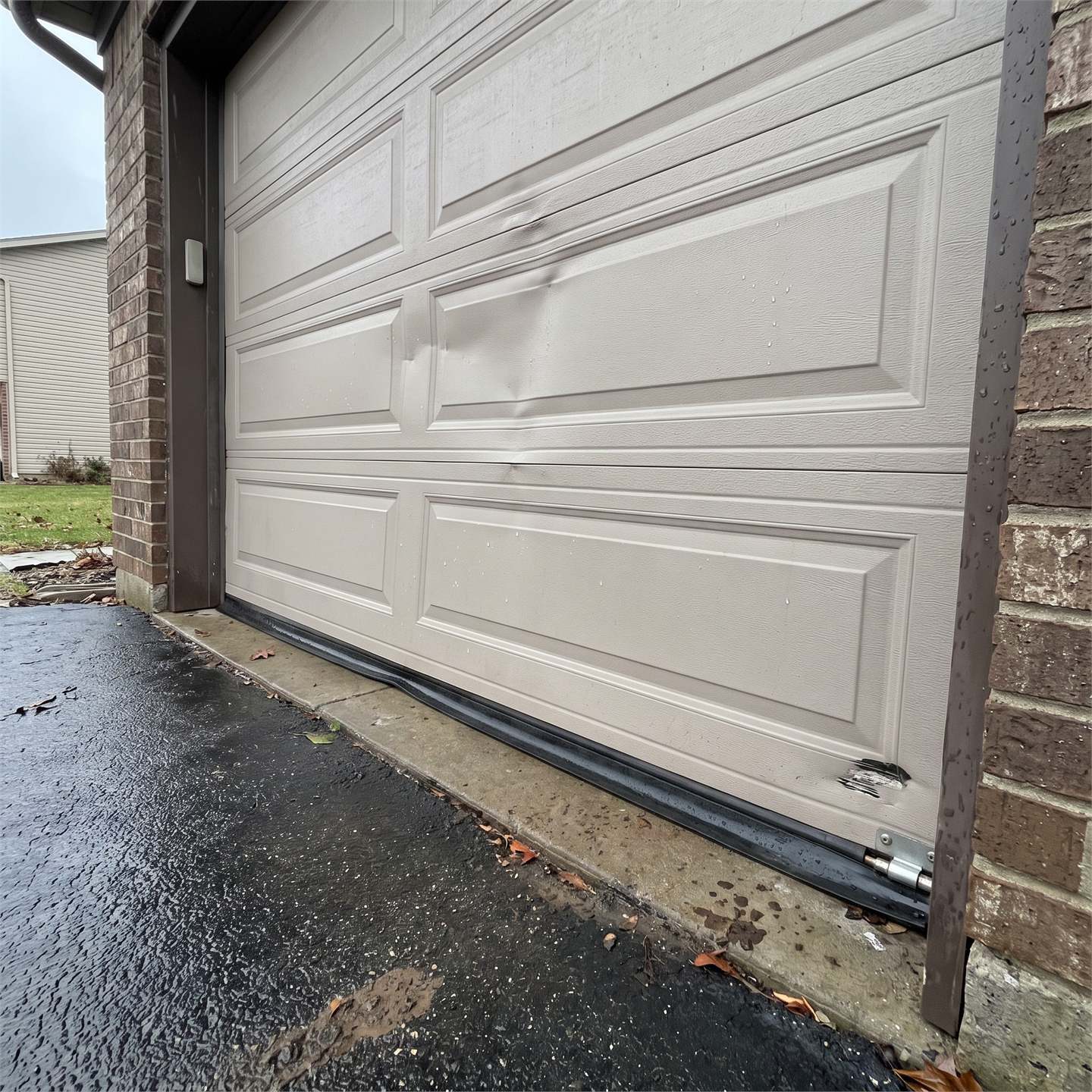
The door should not be forced through a rough cycle just to see whether it will move. A bent panel or displaced track can place extra strain on springs, cables, rollers, and the opener. Those components can carry stored energy, so the condition belongs with a trained door technician rather than a trial-and-error adjustment.
Compare wind pressure with ordinary wear
Garage doors are large openings. Wind can push a weak door inward, pull at attachments, or drive debris into a panel. Age, vehicle impact, worn rollers, loose hardware, and prior repairs can produce some of the same visible symptoms. The useful inspection ties the shape and location of the deformation to the surrounding tracks, fasteners, weather seals, and adjacent wall finishes instead of assuming the cause from one dent.
That comparison matters for the claim decision. If the door was already dragging or patched before the reported loss, the carrier may treat part of the condition as maintenance or prior damage. If the panel distortion lines up with fresh track movement, broken attachments, or debris impact, the contractor scope should describe those connected conditions clearly.
Read the contractor scope beside the carrier estimate
A contractor estimate may specify a complete door assembly while the carrier estimate lists one replacement panel. Those descriptions are not interchangeable unless the exact door can be repaired that way. The documents should identify the door size, panel profile, insulation, finish, glazing, track type, hardware, wind rating, labor, disposal, and any work needed at the jamb or opener.
Check whether the estimate answers these points:
- Confirm whether the replacement panel is still manufactured in the same profile, thickness, and finish.
- Confirm that the panel can be replaced without leaving damaged hinges, rollers, tracks, or brackets in service.
- Match the written repair scope to setup, balancing, testing, disposal, and any required permit or code note.
- If the door assembly is replaced, match the carrier estimate to the same size, construction, and rated product described by the contractor.
The Georgia storm and hail claim guide explains why the reported mechanism, physical condition, and repair scope need to be evaluated together.
A narrow line item can create a real cost gap
Pricing one panel may look reasonable until the matching profile is unavailable, the track is also bent, or the door cannot be balanced with mixed components. Then the homeowner can face a missing labor charge, a second service visit, or an out-of-pocket amount for the rest of the assembly. On the other hand, replacing everything without explaining why each part is affected can make the contractor estimate hard to support.
Policy language still controls the coverage decision. The inspection and estimates supply the component facts: what moved, what failed, what was pre-existing, which parts can be repaired, and what work is necessary to return the opening to a safe operating condition.
End with a component-level comparison
Before relying on a one-panel allowance, compare the contractor scope and carrier estimate against the door technician’s findings for the panels, tracks, rollers, attachments, balance, and available replacement parts.
This article provides general educational information. It does not determine coverage or replace a property-specific inspection, policy review, or repair assessment.